An air to air heat exchanger transfers thermal energy between two separate air streams to reduce the energy required for heating or cooling incoming air. Instead of allowing conditioned exhaust air to leave a building without recovery, the system captures useful thermal energy and transfers it to incoming outdoor air. This process can reduce ventilation-related HVAC loads while supporting controlled fresh air supply. Air-to-air heat exchangers are used across commercial, industrial, institutional, and other facilities where ventilation and energy efficiency are important. Their design and performance depend on airflow, operating conditions, heat transfer technology, and the requirements of the building.
What Is an Air to Air Heat Exchanger?
An air to air heat exchanger is a ventilation component designed to transfer heat between an outgoing air stream and an incoming air stream. The two streams remain physically separated, while a heat transfer surface or medium allows thermal energy to move from one stream to another. During colder conditions, heat from warmer exhaust air can be transferred to colder outdoor air. During warmer conditions, the process can help transfer heat away from incoming outdoor air before it reaches the main HVAC equipment.
The primary purpose is to recover energy that would otherwise leave the building through exhaust ventilation. Conditioning outdoor air can require considerable heating or cooling capacity, particularly in facilities with high ventilation requirements. Recovering energy from exhaust air reduces the temperature difference that the HVAC system needs to handle. This makes air-to-air heat exchange a useful component in ventilation systems designed for energy-conscious operation.
How Does an Air to Air Heat Exchanger Work?
An air-to-air heat exchanger operates by bringing supply and exhaust air streams into controlled thermal contact through a heat transfer surface or recovery medium. The incoming outdoor air passes through one side of the system, while exhaust air moves through another. Thermal energy moves between the streams according to their temperature difference. Proper system design keeps the airflow paths separated and maintains the required ventilation performance.
Outdoor Air Enters the Ventilation System
Fresh outdoor air enters through the ventilation intake and moves toward the heat recovery section. Outdoor air may be significantly warmer or colder than the desired indoor supply temperature. Without energy recovery, the HVAC system must provide most of the energy needed to bring this air to the required condition. An air-to-air heat exchanger can reduce this conditioning requirement before the air reaches downstream equipment.
Exhaust Air Leaves the Building
Exhaust air leaving a conditioned space contains useful thermal energy. In heating conditions, this air may be warmer than outdoor air, while in cooling conditions it may be cooler. Instead of releasing this energy directly outdoors, the recovery system uses it as part of the heat exchange process. The amount of recoverable energy depends on airflow, temperature differences, heat exchanger design, and operating conditions.
Heat Transfers Between the Air Streams
Heat moves from the warmer air stream toward the cooler air stream through the exchanger’s heat transfer medium. The supply and exhaust air paths remain separated while this transfer takes place. This arrangement allows the system to recover thermal energy without requiring the two air streams to be intentionally mixed. Heat transfer performance is influenced by the surface area, airflow arrangement, materials, and temperature difference between the streams.
Preconditioned Air Enters the Building
After passing through the heat recovery section, the incoming air is closer to the desired supply condition. The main HVAC equipment then has less temperature adjustment to perform. This can help reduce ventilation-related heating or cooling demand. The exchanger therefore works as part of the overall HVAC system rather than replacing the heating or cooling equipment.
Main Types of Air to Air Heat Exchangers
Air-to-air heat exchangers can use different technologies depending on the required airflow, heat transfer performance, installation conditions, and application. The main configurations include rotary recovery systems, fixed plate exchangers, and heat pipe systems. Each approach has different operating characteristics and design considerations.
Rotary Heat Exchangers
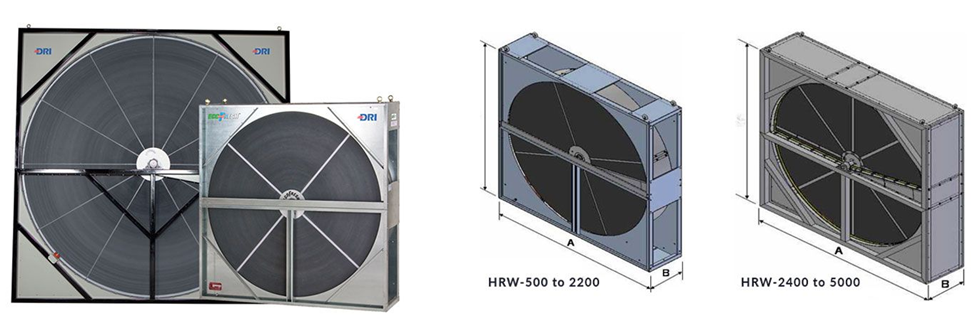
Rotary heat exchangers use a rotating wheel containing a heat transfer matrix. As the wheel rotates between exhaust and supply air streams, the matrix absorbs thermal energy from one stream and releases it into the other. This continuous rotation allows the system to recover energy as both air streams move through the equipment. Rotary systems are commonly considered where continuous energy recovery and substantial airflow capacity are required.
Fixed Plate Heat Exchangers
Fixed plate heat exchangers use stationary plates that separate the supply and exhaust air paths. Heat passes through the plates from one air stream to the other without requiring a rotating component. Their construction can provide a straightforward heat transfer arrangement with no moving recovery wheel. Selection depends on airflow requirements, pressure drop, installation space, and the desired recovery characteristics.
Heat Pipes and Other Recovery Technologies
Heat pipe systems use sealed tubes containing a working fluid to transfer thermal energy between air streams. The working fluid changes phase as it absorbs and releases heat, allowing energy to move through the heat pipe. Other recovery technologies may also be selected for specific ventilation and HVAC requirements. The appropriate configuration depends on the building, climate, airflow pattern, maintenance requirements, and desired performance.
See also: Why Careful Planning Makes Every Business Move More Successful
What Is an Energy Recovery Wheel?
An energy recovery wheel is a rotating heat transfer device that moves through separate supply and exhaust air streams. Its matrix absorbs energy from one air stream and transfers that energy to the other as the wheel rotates. Depending on the type of media used, energy recovery wheels may be designed for sensible heat transfer alone or for broader energy recovery that includes moisture transfer.
Energy recovery wheels are useful in systems where outdoor air ventilation creates a significant heating or cooling load. Their performance depends on wheel construction, media characteristics, rotational speed, airflow, temperature difference, and system configuration. Correct selection helps ensure that the recovery wheel works effectively with the associated air handling and ventilation equipment.
Sensible Heat vs Latent Energy Recovery
Heat recovery can involve sensible energy, latent energy, or both, depending on the recovery technology. Understanding this difference is important when designing ventilation systems for different climate and indoor air requirements.
Sensible Heat Recovery
Sensible heat recovery relates primarily to air temperature. The heat exchanger transfers thermal energy between the air streams without focusing on moisture transfer. This type of recovery can help precondition incoming outdoor air before it reaches the heating or cooling equipment.
Latent Energy Recovery
Latent energy recovery involves moisture as well as thermal energy. Recovery media designed for this purpose can transfer water vapor between air streams under appropriate operating conditions. This can influence the humidity level of the incoming air and reduce part of the latent load placed on the HVAC system.
Why the Difference Matters
The required recovery approach depends on climate, building use, ventilation rates, indoor humidity requirements, and HVAC design. A system operating in a humid environment may have different recovery priorities from one operating primarily under dry or cold conditions. Engineers therefore need to evaluate both sensible and latent requirements when selecting recovery equipment.
Benefits of Using an Air to Air Heat Exchanger
An air-to-air heat exchanger can provide several operational benefits when correctly integrated into a ventilation system. The main advantages include:
- Reduced ventilation-related heating and cooling demand
- Recovery of thermal energy from exhaust air
- More efficient fresh air conditioning
- Improved control of incoming outdoor air temperature
- Support for energy-efficient HVAC system design
- Potential reduction in operating energy requirements
- Better integration of ventilation and energy recovery
The actual performance depends on equipment selection, airflow balance, operating conditions, maintenance, and system design. Energy recovery should therefore be evaluated as part of the complete HVAC system rather than as an isolated component.
Applications of Air to Air Heat Exchangers
Air-to-air heat exchangers are suitable for facilities that require regular outdoor air ventilation while also seeking to manage the associated thermal load. Their applications extend across different building types and operating environments.
Commercial Buildings
Offices, retail facilities, and other commercial buildings often require controlled outdoor air to maintain suitable indoor conditions. Heat recovery can reduce the energy required to condition this incoming air. The exchanger can be integrated with air handling and ventilation equipment to support continuous operation.
Industrial Facilities
Industrial buildings may have substantial exhaust and makeup air requirements. Recovering thermal energy from exhaust air can help reduce the load associated with conditioning replacement outdoor air. System design must account for the temperature, contaminants, airflow rate, and operating schedule of the facility.
Healthcare Facilities
Healthcare environments require carefully designed ventilation systems with appropriate airflow management. Heat recovery can support ventilation efficiency while allowing outdoor air to be conditioned before entering occupied areas. Equipment selection must consider air quality, pressure relationships, filtration, and system requirements.
Hospitality and Institutional Buildings
Hotels, educational facilities, and institutional buildings can have significant outdoor air requirements. Heat recovery systems can help manage the thermal impact of continuous ventilation. Their integration with air handling systems depends on the facility’s airflow requirements and HVAC configuration.
For facilities requiring broader air conditioning and ventilation functions, an air treatment unit can be integrated into an overall air management strategy.
Air to Air Heat Exchanger vs Conventional Ventilation
Conventional ventilation can exhaust conditioned indoor air directly outdoors while drawing in untreated outdoor air. The HVAC system then has to handle the full temperature difference between the outdoor air and the required supply condition. An air-to-air heat exchanger changes this process by recovering part of the energy contained in the exhaust air. The incoming air can therefore be partially preconditioned before reaching the main HVAC equipment.
The difference becomes more relevant as ventilation rates increase. Facilities with high outdoor air requirements can have substantial conditioning loads associated with ventilation. Adding energy recovery can help capture a portion of the thermal energy that would otherwise be lost through exhaust. The final benefit depends on exchanger efficiency, airflow conditions, climate, controls, and the complete system design.
Factors to Consider When Selecting an Air to Air Heat Exchanger
Selecting the right exchanger requires more than comparing nominal heat recovery performance. Engineers should evaluate the operating conditions and integration requirements of the complete ventilation system.
Important selection factors include:
- Supply and exhaust airflow capacity
- Sensible and latent recovery requirements
- Temperature and humidity conditions
- Heat transfer efficiency
- Pressure drop and fan energy
- Airflow separation requirements
- Available installation space
- Maintenance and cleaning requirements
- Control and monitoring requirements
- Compatibility with existing HVAC equipment
Pressure drop is particularly relevant because the exchanger becomes part of the air path. A design that creates excessive resistance can increase fan energy requirements. Maintenance access is also important because fouling, dust accumulation, or component deterioration can affect long-term performance.
How Air to Air Heat Exchangers Support Energy-Efficient HVAC Systems
Energy recovery works best when it is considered as part of the complete HVAC design. Ventilation, filtration, heating, cooling, humidity control, and air distribution all influence system performance. An air-to-air heat exchanger can reduce the thermal burden created by outdoor air, but it does not replace the need for properly sized HVAC equipment. Controls must also coordinate airflow and recovery operation according to actual building requirements.
Heat recovery can be particularly useful in systems that operate continuously or introduce substantial quantities of outdoor air. By recovering energy from exhaust air, the ventilation system can make better use of energy that is already present in the building’s air stream. Proper commissioning and maintenance help preserve the intended performance throughout the operating life of the equipment.
Facilities that require specialized cooling and ventilation approaches can also consider warehouse cooling solutions as part of a broader air treatment strategy.
Conclusion
An air to air heat exchanger provides a practical method for recovering thermal energy from exhaust air and transferring it to incoming outdoor air. By preconditioning fresh air, the technology can reduce part of the heating or cooling load associated with ventilation. Rotary wheels, fixed plate exchangers, heat pipes, and other recovery technologies offer different approaches for meeting system requirements. Selection should consider airflow, recovery type, pressure drop, climate, air quality, maintenance, and integration with the complete HVAC system.
For facilities evaluating energy recovery equipment, system requirements should be reviewed carefully before selecting a particular technology. The right configuration can help connect efficient ventilation with effective air treatment and HVAC operation. For project-specific requirements and equipment information, contact Desiccant Rotors International to discuss the appropriate solution.
Frequently Asked Questions About Air to Air Heat Exchangers
What is an air to air heat exchanger?
An air to air heat exchanger transfers thermal energy between incoming and outgoing air streams. The streams remain separated while heat moves through a transfer surface or recovery medium. This process can reduce the energy required to condition fresh outdoor air.
How does an air to air heat exchanger save energy?
It recovers thermal energy from exhaust air and transfers it to incoming outdoor air. This preconditions the incoming air before it reaches the main heating or cooling equipment. As a result, the HVAC system may need to provide less additional conditioning energy.
Do air to air heat exchangers mix indoor and outdoor air?
The supply and exhaust air streams are designed to remain separated during normal heat exchange. Thermal energy transfers between the streams through the heat transfer surface or recovery medium. The specific level of air separation and transfer characteristics depends on the selected exchanger technology.
What is the difference between an air to air heat exchanger and an energy recovery wheel?
An air-to-air heat exchanger is a broad category of equipment that transfers energy between separate air streams. An energy recovery wheel is one specific type that uses a rotating heat transfer matrix. Depending on its media and design, an energy recovery wheel may recover sensible energy and potentially latent energy.
Where are air to air heat exchangers commonly used?
They are used in commercial buildings, industrial facilities, healthcare environments, hospitality properties, institutional buildings, and ventilation systems. They are particularly relevant where outdoor air requirements create significant heating or cooling loads. The final equipment selection should match the facility’s airflow, climate, air quality, and HVAC requirements.