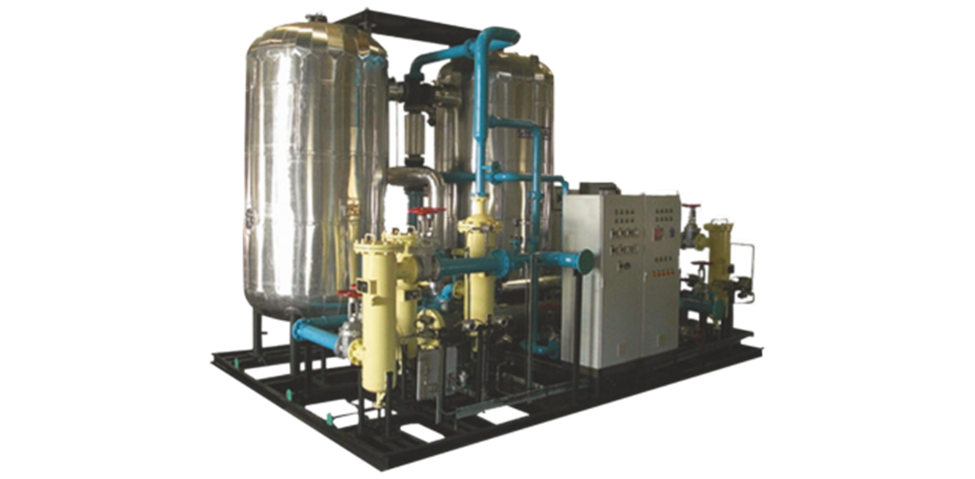
Moisture is a common concern in compressed air systems. Air leaving a compressor can contain water vapour that may condense as the air cools, creating problems for downstream equipment and industrial processes. Desiccant air dryers are used when applications require a lower pressure dew point and stronger moisture control. A no loss split flow air dryer uses a specialized regeneration arrangement designed to reduce the loss of compressed air while restoring the drying capacity of the desiccant.
Understanding how this technology works helps industrial users compare different dryer configurations. The selection process should consider airflow, pressure, temperature, required pressure dew point, regeneration requirements, energy consumption, and maintenance. The right system should match the actual conditions of the compressed air installation rather than relying on capacity alone.
What Is a No Loss Split Flow Air Dryer?
A no loss split flow air dryer is a desiccant-based compressed air treatment system designed to remove water vapour while minimizing the use of compressed air during regeneration. The system uses desiccant material to adsorb moisture from compressed air during the drying cycle. Once the desiccant becomes saturated, it must be regenerated to restore its moisture adsorption capacity. The split-flow arrangement manages regeneration air in a way intended to reduce compressed air loss.
The term “no loss” refers to the objective of avoiding or minimizing the loss of treated compressed air that can occur with certain purge-based regeneration methods. This can be significant because compressed air requires energy to produce. Using a portion of compressed air for regeneration can therefore increase the effective energy demand of the overall system.
How Does a No Loss Split Flow Air Dryer Work?
The Adsorption Process
During the adsorption cycle, wet compressed air enters one of the dryer vessels containing desiccant material. The desiccant attracts and holds water vapour as the compressed air passes through the bed. The moisture content of the air is reduced before the treated air leaves the vessel and moves toward the point of use.
The performance of the adsorption stage depends on several operating conditions. Airflow, pressure, inlet temperature, moisture load, and desiccant characteristics all affect the drying process. Maintaining suitable upstream filtration and condensate management can also support reliable operation. Properly controlled adsorption allows the dryer to provide consistent moisture removal throughout its operating cycle.
See also: The Revolution in Audio Technology: Wireless Earbuds
The Regeneration Process
Desiccant cannot adsorb moisture indefinitely. Once its available adsorption capacity is reached, the material needs to be regenerated. Regeneration removes the accumulated water vapour from the desiccant so the material can return to service.
The regeneration method is one of the major differences between various desiccant dryer designs. A no loss split flow configuration uses a controlled airflow arrangement during regeneration. The objective is to regenerate the desiccant without unnecessarily consuming a significant portion of the compressed air being produced for the industrial process.
Split-Flow Regeneration
The split-flow principle involves directing regeneration airflow through the dryer in a controlled manner. Instead of treating the entire regeneration process as a single conventional purge operation, the airflow is managed according to the dryer design and operating cycle.
This arrangement can help reduce compressed air losses associated with regeneration. The exact airflow path and regeneration sequence depend on the specific dryer configuration. Automated controls and valves coordinate the movement of air between the drying and regeneration sections to support continuous operation.
Switching Between Drying and Regeneration
A desiccant dryer generally uses more than one vessel so that drying and regeneration can occur in alternating cycles. While one vessel removes moisture from compressed air, another vessel is regenerated. After the required cycle is completed, the vessels switch roles.
Valves and control systems manage this sequence automatically. Correct timing is important because the dryer needs to complete regeneration before a vessel returns to the adsorption cycle. Automated switching also reduces manual intervention and helps maintain a continuous supply of dry compressed air.
What Does “No Loss” Mean in a Compressed Air Dryer?
In compressed air drying, “loss” commonly refers to the portion of compressed air that may be diverted from the useful process for regeneration. Conventional purge-based desiccant dryers can consume some dried compressed air during regeneration. That air has already required energy to compress, so using it for regeneration can affect the overall efficiency of the compressed air system.
A no loss design aims to reduce this type of compressed air consumption through its regeneration arrangement. This does not mean that the entire dryer operates without energy consumption. Blowers, heaters, controls, valves, and other components may still require energy depending on the specific design.
The overall energy performance should therefore be evaluated using the complete operating cycle. Important considerations include regeneration requirements, blower power, heating requirements, pressure drop, operating hours, and compressed air demand.
Key Components of a No Loss Split Flow Air Dryer
The exact configuration can vary, but several components are central to the operation of this type of dryer.
- Desiccant vessels: Provide the space where moisture adsorption and regeneration take place.
- Desiccant material: Adsorbs water vapour from compressed air.
- Split-flow air circuit: Controls the movement of regeneration air through the drying system.
- Valves: Direct airflow according to the operating cycle.
- Control system: Coordinates adsorption, regeneration, and vessel changeover.
- Monitoring components: Help operators track important operating parameters.
Each component has a role in maintaining reliable drying performance. Valve operation is particularly important because incorrect sequencing can affect the adsorption and regeneration cycles. Control systems also allow the dryer to operate according to programmed conditions instead of requiring constant manual adjustment.
Benefits of a No Loss Split Flow Air Dryer
Reduced Compressed Air Loss
One of the primary reasons to consider this dryer configuration is its approach to regeneration. Reducing the amount of compressed air used for regeneration can help preserve more of the air produced by the compressor for the intended industrial process.
This can be especially relevant in systems with high compressed air demand. Any reduction in unnecessary air consumption can contribute to more efficient use of compressor capacity. The actual savings depend on the dryer design, operating conditions, and characteristics of the complete compressed air system.
Potential Energy Savings
Producing compressed air requires electrical energy. When compressed air is diverted for regeneration, the compressor may need to produce additional air to compensate for that consumption. A regeneration approach designed to reduce compressed air loss can therefore support better energy utilization.
However, energy consumption should not be judged from purge requirements alone. Blower power, heating requirements, pressure drop, compressor loading, and operating schedules also influence the total energy profile. A complete system assessment provides a more accurate basis for evaluating efficiency.
Reliable Moisture Removal
Desiccant drying technology is designed to reduce moisture in compressed air and can achieve low pressure dew points when properly selected and operated. For industrial systems that require dependable moisture control, an industrial moisture removal dryer can help protect downstream equipment and processes from problems associated with excess moisture. The appropriate dryer should be selected according to airflow, pressure, inlet temperature, and the required pressure dew point. Proper filtration and condensate management also support effective dryer performance. This makes moisture removal an important part of maintaining compressed air quality.
Continuous Operation
Alternating adsorption and regeneration cycles allow the dryer to operate continuously. One vessel can perform the drying function while another is undergoing regeneration. Automated controls coordinate the changeover when the appropriate cycle is completed.
This arrangement is useful for industrial systems where compressed air is required throughout ongoing operations. Continuous operation also reduces the need for operators to manually manage each regeneration stage.
Better Compressed Air System Efficiency
Dryer efficiency contributes to the performance of the wider compressed air system. Reducing unnecessary compressed air consumption can help make better use of available compressor capacity.
The dryer should still be evaluated as part of the complete system. Compressor performance, piping, filters, pressure drop, storage, operating pressure, and end-use equipment can all influence overall efficiency.
Where Are No Loss Split Flow Air Dryers Used?
No loss split flow air dryers can be considered for industrial applications where moisture control and efficient compressed air operation are important. The appropriate configuration depends on the required pressure dew point and operating conditions.
Potential application areas include:
- Manufacturing and automation
- Pharmaceutical production
- Food and beverage processing
- Chemical and process industries
- Power generation
- Electronics manufacturing
- Instrumentation systems
- Pneumatic equipment
Different industries have different compressed air quality requirements. Some processes require particularly dry air because moisture can affect equipment or production conditions. Dryer selection should therefore begin with the actual air quality requirements of the application.
No Loss Split Flow Air Dryer vs Conventional Desiccant Dryers
Heat of compression dryers use the heat generated during the air compression process to assist with desiccant regeneration. This approach differs from systems that rely on a dedicated external regeneration method. A compressed air dryer with HOC technology can be considered when the available compressor heat and operating conditions align with the requirements of the drying application. Factors such as compressor type, operating profile, airflow, required pressure dew point, and regeneration conditions should be assessed before selecting a suitable technology. Comparing these factors helps ensure that the dryer configuration matches the requirements of the complete compressed air system.
Purge Air Consumption
The main comparison point is how each dryer handles regeneration. Some conventional desiccant dryers use a portion of dry compressed air to regenerate the desiccant. A no loss split flow design uses a different airflow arrangement intended to minimize this consumption.
This distinction can affect the amount of compressed air available for production. It can also influence the energy required to operate the compressor. The actual difference depends on the specific technologies being compared.
Energy Consumption
Energy use is influenced by more than purge air alone. Different dryers may require different amounts of blower power, heating energy, or compressed air depending on their regeneration method.
A proper comparison should consider the complete operating cycle. Looking only at the initial purchase price or one operating parameter may not provide an accurate picture of long-term costs.
Drying Performance
The required pressure dew point remains an important factor regardless of dryer type. A system that minimizes air loss but does not meet the required drying specification would not be suitable for the application.
Airflow, inlet temperature, pressure, moisture load, and operating conditions should therefore be considered alongside regeneration efficiency.
Application Suitability
No single dryer configuration is appropriate for every industrial installation. Some applications may benefit from one regeneration technology, while others may require a different approach.
The decision should be based on technical requirements, operating conditions, energy considerations, installation needs, and maintenance expectations.
Factors to Consider When Choosing a No Loss Split Flow Air Dryer
Compressed Air Flow Rate
The dryer should be capable of handling the required airflow under actual operating conditions. Both average and peak demand should be considered when determining capacity. Selecting a unit based only on compressor nameplate capacity may not reflect the actual air demand.
Required Pressure Dew Point
Pressure dew point indicates the moisture condition of compressed air under pressure. Different applications require different levels of moisture control.
The required dew point should be established before selecting the dryer. This helps ensure that the equipment can meet the technical needs of the process without unnecessary specifications.
Inlet Pressure and Temperature
Compressed air conditions influence dryer performance. Inlet temperature, pressure, ambient conditions, and moisture load should be evaluated during equipment selection.
These factors can affect the amount of moisture entering the dryer and the conditions under which the desiccant operates.
Regeneration Requirements
Understanding the regeneration cycle helps users compare different dryer technologies. The regeneration method affects compressed air consumption, energy use, controls, and maintenance.
A no loss split flow configuration should be evaluated according to its complete operating requirements rather than the “no loss” feature alone.
Energy Consumption
Blower requirements, heaters, pressure drop, and compressor loading can all influence operating costs. These factors should be reviewed over the expected operating schedule.
Maintenance and Service
Regular maintenance supports reliable dryer performance. Operators should consider access to components, valve servicing, filtration, desiccant condition, and manufacturer service recommendations.
Why Proper Dryer Sizing Matters
Correct dryer sizing helps ensure that the equipment can handle the required airflow and moisture load. An undersized unit may struggle during periods of high demand, while excessive capacity can increase equipment costs without providing a corresponding operational benefit.
Sizing should consider airflow, operating pressure, inlet temperature, required pressure dew point, ambient conditions, and expected operating profile. Future changes in compressed air demand may also be relevant. A technical assessment of actual system conditions provides a stronger basis for selecting the appropriate dryer capacity.
Maintenance Tips for No Loss Split Flow Air Dryers
Regular maintenance helps protect drying performance and operating reliability. The dryer should be inspected according to the manufacturer’s recommended schedule, with particular attention given to components involved in airflow control and regeneration.
Important maintenance activities include:
- Checking desiccant condition
- Inspecting valves and switching mechanisms
- Monitoring pressure drop
- Maintaining upstream filters
- Checking control and monitoring systems
- Reviewing operating parameters
- Following recommended service intervals
Upstream filtration and condensate management are also important. Excessive liquid water entering the dryer can place additional demands on the desiccant system. Maintaining the complete compressed air treatment system helps support consistent dryer operation.
Is a No Loss Split Flow Air Dryer Suitable for Your Application?
A no loss split flow air dryer may be suitable when an industrial compressed air system requires effective moisture removal while reducing the use of compressed air during regeneration. Its suitability depends on the required pressure dew point, airflow, inlet conditions, operating schedule, energy requirements, and maintenance needs.
A complete evaluation should consider the dryer alongside the compressor and other air treatment equipment. Comparing regeneration methods can also help identify the technology that best aligns with the system’s requirements. Proper sizing and appropriate operating conditions remain essential for achieving dependable performance.
For assistance with compressed air drying requirements, you can contact Delair India Pvt Ltd.
Conclusion
A no loss split flow air dryer provides a desiccant-based approach to compressed air moisture removal with a regeneration arrangement designed to reduce compressed air loss. Its operating cycle combines adsorption, regeneration, and automatic vessel switching to support continuous delivery of dry compressed air. The technology can be relevant to industrial applications where moisture control and efficient compressed air utilization are important.
Choosing the right system requires more than looking at dryer capacity. Pressure dew point, airflow, inlet conditions, regeneration requirements, energy consumption, installation, and maintenance should all be evaluated together. A properly selected and maintained dryer can support reliable compressed air treatment while helping the overall system operate efficiently.
Frequently Asked Questions
What is a no loss split flow air dryer?
A no loss split flow air dryer is a desiccant-based compressed air dryer designed to remove moisture while minimizing compressed air consumption during regeneration. It uses a controlled split-flow arrangement to regenerate the desiccant.
How does a no loss split flow air dryer work?
Wet compressed air passes through a desiccant vessel during the adsorption cycle, where moisture is removed. Another vessel undergoes regeneration at the same time. The vessels alternate between these functions to provide continuous drying.
What does no loss mean in a compressed air dryer?
“No loss” refers to the design objective of minimizing the loss of compressed air used for desiccant regeneration. This can help reduce unnecessary compressed air consumption, although the dryer may still use energy for components such as controls, blowers, or heaters depending on its design.
What are the benefits of a split flow air dryer?
Potential benefits include reduced compressed air consumption for regeneration, efficient use of compressor capacity, continuous operation, and reliable moisture removal. Actual performance depends on the dryer configuration and operating conditions.
How do you select the right no loss split flow air dryer?
Consider the required airflow, operating pressure, inlet temperature, pressure dew point, moisture load, regeneration method, energy requirements, installation conditions, and maintenance needs. Proper sizing based on actual operating conditions is important for reliable performance.