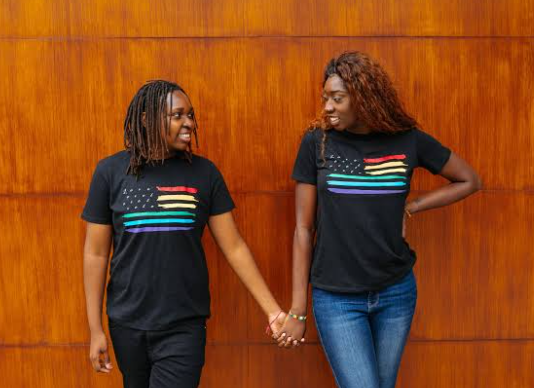
Most people learn a handful of words for sexual orientation in school or through pop culture, and then spend years realizing the map they were given was missing a lot of territory. Labels like gay, straight, and bisexual are widely recognized, but human attraction is genuinely more varied than those three words can hold. Understanding the broader vocabulary around sexual orientation is not about memorizing jargon. It is about having the right words to understand yourself or the people around you.
This article walks through the most common and some of the less commonly discussed sexual orientation terms, explains what distinguishes them from one another, and touches on why accurate language matters for mental health and social connection.
Why Sexual Orientation Labels Exist in the First Place
Labels can feel limiting. Plenty of people resist them entirely, which is a completely valid choice. But for many individuals, finding a word that fits their experience can be a significant moment. It signals that other people share that experience, that there is a community, and that the feeling has a name. Research published by the Williams Institute at UCLA found that approximately 5.6 percent of U.S. adults identified as LGBTQ+ as of 2021, a figure that had risen from 4.5 percent in 2017. A large portion of that growth came from younger adults identifying as bisexual or choosing terms beyond the traditional binary. This suggests that people are not necessarily experiencing attraction differently than earlier generations did. They simply have more language available to describe it.
Language around identity also intersects with mental health in meaningful ways. Studies consistently show that LGBTQ+ individuals face higher rates of anxiety, depression, and psychological distress than the general population. Minority stress theory, developed by researcher Ilan Meyer, argues that much of this disparity stems not from identity itself but from the social stigma, discrimination, and identity concealment that people experience. When someone lacks the words to describe themselves, or when those words carry social penalties, the psychological cost is real.
The Most Widely Recognized Orientation Terms
Before getting into less familiar territory, it helps to ground things in the terms most people have encountered. These are broad categories, and within each one there is considerable individual variation.
- Heterosexual (straight): attraction primarily to people of a different gender than one’s own.
- Gay: typically refers to men attracted to men, though some women and non-binary people use it too.
- Lesbian: women who are attracted primarily to other women.
- Bisexual: attraction to one’s own gender and to other genders. Bisexuality does not require equal attraction to all genders, nor does it imply attraction to only two.
- Asexual: experiencing little or no sexual attraction to others. Asexuality exists on a spectrum and does not necessarily mean an absence of romantic attraction.
- Pansexual: attraction to people regardless of gender, often described as attraction to people of any or all genders.
It is worth pausing on bisexuality and pansexuality for a moment, because confusion between them is common. The distinction is subtle and sometimes debated within LGBTQ+ communities themselves. Pansexuality explicitly places gender as irrelevant to attraction. Bisexuality, as many people define it today, can also include attraction across the gender spectrum, though historically the term has been interpreted by some as referring only to two genders. In practice, how a person identifies often comes down to which community or word resonates most, not to a fixed diagnostic difference.
Lesser-Known Terms That Fill Real Gaps
Beyond the widely recognized labels, there are several orientation terms that describe more specific patterns of attraction. These words exist because some people found that none of the existing terms quite fit their experience, and having a more precise label was genuinely useful to them.
One example worth understanding is polysexuality, which refers to attraction to multiple, but not necessarily all, genders. It sits in a conceptual space between bisexuality and pansexuality, acknowledging that someone might be attracted to several genders while still not feeling attraction to every gender identity. For people whose experience matches that description, having that specific word available can bring real clarity.
Other terms that come up regularly include demisexual, which describes people who experience sexual attraction only after forming a strong emotional bond, and graysexual, which describes people who experience sexual attraction rarely or only under specific circumstances. Queer is a broad, reclaimed term that many people use as an umbrella when other labels feel too narrow or when they prefer to resist strict categorization altogether.
How These Terms Compare at a Glance
| Term | Core Meaning | Key Distinction |
| Heterosexual | Attraction to a different gender | The most socially normative orientation |
| Gay / Lesbian | Attraction to the same gender | Gay is often used broadly; lesbian is specific to women |
| Bisexual | Attraction to own and other genders | Does not require equal or binary attraction |
| Pansexual | Attraction regardless of gender | Gender is explicitly not a factor in attraction |
| Polysexual | Attraction to multiple but not all genders | Distinct from pansexual; some genders may not be included |
| Asexual | Little or no sexual attraction | Exists on a spectrum; may include romantic attraction |
| Demisexual | Sexual attraction only after emotional bonding | Often considered part of the asexual spectrum |
| Queer | Broad non-normative identity | Umbrella term; meaning varies by person |
Sexual Orientation Is Not the Same as Gender Identity
One of the most persistent sources of confusion in these conversations is the blurring of sexual orientation with gender identity. They are related in some ways but fundamentally different things. Sexual orientation describes who a person is attracted to. Gender identity describes a person’s internal sense of their own gender, which may or may not align with the sex they were assigned at birth.
A transgender woman, for example, might identify as heterosexual, lesbian, bisexual, or any other orientation. Her gender identity and her sexual orientation are separate dimensions of who she is. Keeping these concepts distinct matters because conflating them can lead to misunderstandings that cause real harm, both in everyday conversation and in clinical settings.
The Mental Health Connection
Understanding orientation terminology has direct implications for mental health care. Therapists, counselors, and support workers who are familiar with a fuller range of orientation terms are better equipped to make clients feel seen and understood. When a client uses a term the clinician does not recognize, the clinician asking a curious and respectful follow-up question is far more helpful than simply mapping the client’s experience onto a more familiar label.
For individuals who are questioning their orientation, the process of exploring available language can itself be therapeutic. It shifts the experience from one of isolation, wondering whether anyone else feels this way, to one of recognition. At the same time, mental health professionals are generally careful to note that no one needs to choose a label. Identity is not a diagnostic category. Some people settle comfortably into a term early in life. Others move between labels as their understanding of themselves changes. Still others opt out of labeling entirely. All of these are legitimate approaches.
See also: How Long Does THC Stay in Your System?
When Exploration Feels Overwhelming
For some people, the process of questioning sexual orientation is accompanied by anxiety, family tension, or fear of social consequences. These experiences are real and serious. LGBTQ+ affirming therapy is specifically designed to support people through identity exploration without judgment or pressure toward any particular outcome. The goal is helping the person understand themselves more clearly, at whatever pace feels manageable.
Putting It All Together
Sexual orientation is not a short list of fixed categories with clean edges. It is a dimension of human experience that varies widely across individuals and can evolve across a lifetime. The vocabulary available to describe it has grown considerably over the past few decades, not because people are inventing new ways to be human, but because more people have felt safe enough to articulate what was already there. Knowing the terminology, even for those who feel confident in their own identity, makes it easier to be a thoughtful friend, family member, colleague, or clinician to the people around them.