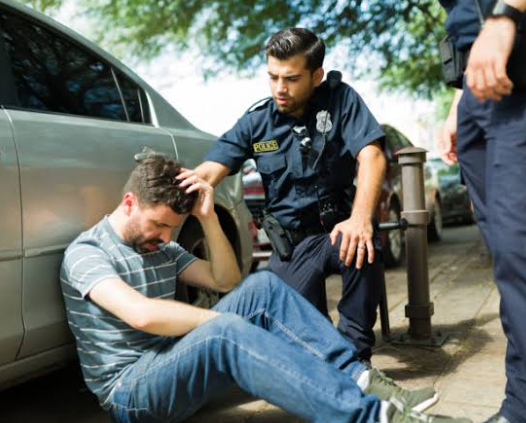
Police officers, sheriff’s deputies, and other law enforcement professionals routinely face situations that most people will never experience in a lifetime. Shift after shift, they absorb trauma, make split-second decisions under pressure, and carry the weight of those experiences home. The psychological toll of that work is real, measurable, and far too often left unaddressed. Understanding what officers go through, and why mental health support matters so much in this profession, is a conversation worth having openly.
This article looks at the specific stressors that affect law enforcement professionals, the mental health conditions most commonly seen in this population, the barriers that keep officers from seeking help, and what the research says about effective support strategies. Whether you are an officer, a family member, a department administrator, or simply someone who wants to understand the issue better, the information here is grounded in what the evidence actually shows.
The Unique Stress Landscape of Police Work
Law enforcement work involves two overlapping categories of stress. The first is operational stress, which comes from the nature of the job itself: exposure to violence, death, accidents, child abuse cases, and other traumatic incidents. The second is organizational stress, which comes from within the institution: shift work, bureaucratic friction, lack of control over scheduling, perceived lack of support from supervisors, and the persistent sense that no one outside the department truly understands what officers go through.
Research published by the Ruderman Family Foundation found that police officers and firefighters are more likely to die by suicide than in the line of duty. That statistic, while striking, reflects a pattern that researchers and clinicians have documented for years. The cumulative burden of traumatic exposure, compounded by institutional pressures and a culture that historically discourages vulnerability, creates conditions where mental health problems can develop quietly and escalate without intervention.
It is worth noting that operational and organizational stressors do not affect everyone the same way. Individual resilience, personal history, available social support, and the culture of a specific department all shape how stress accumulates over time. This variability is part of why mental health support in law enforcement cannot be reduced to a single program or a one-time training session.
Mental Health Conditions Most Common in Officers
Several mental health conditions appear at elevated rates in law enforcement populations compared to the general public. Post-traumatic stress disorder is probably the most widely recognized, but it is far from the only one. Depression, substance use disorders, and sleep disorders are also significantly prevalent. Each condition has its own profile, but they frequently co-occur, which complicates both diagnosis and treatment.
| Condition | Primary Triggers in Law Enforcement | Common Signs |
| PTSD | Direct trauma exposure, critical incidents, cumulative traumatic events | Flashbacks, hypervigilance, emotional numbness, avoidance |
| Depression | Chronic stress, isolation, shift work disruption, moral injury | Persistent low mood, fatigue, withdrawal from relationships, hopelessness |
| Anxiety Disorders | Unpredictability of calls, threat assessment demands, ongoing hyperarousal | Excessive worry, physical tension, difficulty concentrating, irritability |
| Substance Use Disorder | Self-medication of stress and trauma symptoms, cultural acceptance of drinking | Increased alcohol use, reliance on substances to sleep or unwind |
| Sleep Disorders | Shift rotation, physiological hyperarousal, trauma-related nightmares | Insomnia, excessive daytime sleepiness, poor sleep quality |
The relationship between these conditions is not linear. An officer who develops PTSD after a critical incident may also develop anxiety and begin using alcohol to manage sleep problems, which then deepens depression. Treating one condition in isolation, without addressing the others, tends to produce incomplete results. That is why comprehensive, trauma-informed care is generally considered more effective than narrowly focused interventions.
Why Officers Often Avoid Seeking Help
The gap between need and treatment in law enforcement is substantial. Studies consistently show that a significant portion of officers who meet diagnostic criteria for a mental health condition never seek professional support. Understanding why requires looking honestly at the culture and the practical barriers involved.
- Stigma: Many officers worry that seeking mental health treatment will be seen as weakness by colleagues or supervisors, damaging their reputation or career trajectory.
- Confidentiality concerns: Officers often fear that information shared in therapy could reach department leadership, affect their fitness-for-duty status, or influence decisions about their service weapon.
- Identity conflict: For officers who strongly identify with the role of protector and problem-solver, admitting to emotional struggle can feel fundamentally at odds with how they see themselves.
- Distrust of civilian providers: Some officers feel that therapists who have never worked in law enforcement cannot genuinely understand what the job involves, reducing their confidence in the process.
- Practical barriers: Irregular shifts, mandatory overtime, and geographic distance from qualified providers all make scheduling consistent care genuinely difficult.
- Peer culture: In departments where discussing mental health is uncommon or actively discouraged, individual officers face social pressure that discourages help-seeking.
These barriers are not unique to any one region or agency type. They appear across large urban departments and small rural agencies alike. Addressing them requires changes at both the individual and systemic level, including department policy, peer support training, and leadership modeling of help-seeking behavior.
The Role of Anxiety in Officer Mental Health
Anxiety is one of the more underappreciated mental health challenges in this field. It often develops gradually, shaped by years of operating in high-threat environments where hypervigilance is not just normal but functionally necessary. The problem arises when that threat-detection system does not switch off during low-risk situations, off-duty hours, or interactions with family members. What was adaptive on patrol becomes a source of suffering at home.
Research specifically examining anxiety in law enforcement personnel has found that generalized anxiety, panic disorder, and social anxiety all occur at meaningful rates, often going unrecognized because the symptoms overlap with traits that are culturally valued in policing, such as alertness, preparedness, and emotional control. An officer who is perpetually scanning for threats, sleeping poorly, and struggling to relax may not immediately recognize these as symptoms of an anxiety disorder rather than just the normal state of being a cop.
Effective treatment for anxiety in this population generally follows the same evidence base that applies broadly, including cognitive behavioral therapy, exposure-based techniques, and in some cases medication, but delivery matters. Officers tend to respond better to providers who understand the occupational context, frame treatment in practical terms, and avoid approaches that feel pathologizing or disconnected from real-world demands.
Evidence-Based Approaches That Show Promise
The research on mental health interventions for law enforcement is still developing, but several approaches have accumulated meaningful evidence. Critical incident stress management, peer support programs, and access to law enforcement-specific employee assistance programs have all shown value when implemented thoughtfully. Cognitive processing therapy and prolonged exposure therapy, both originally developed for PTSD treatment in combat veterans, have been adapted successfully for first responder populations.
Peer support programs deserve particular attention because they address one of the core barriers: trust. When an officer in distress can speak first with a fellow officer who has been trained in mental health support and active listening, the threshold for seeking further help often drops considerably. A 2018 study published in the journal Occupational and Environmental Medicine found that peer support was associated with reduced stigma and increased willingness to seek professional care among police officers.
Department-Level Strategies
- Mandatory check-ins with mental health professionals after critical incidents, framed as standard procedure rather than a response to perceived weakness.
- Clear, enforced confidentiality policies that separate clinical care from fitness-for-duty evaluations.
- Leadership training so supervisors recognize early signs of mental health strain and respond constructively.
- Flexible scheduling accommodations for officers actively engaged in treatment.
- Regular department-wide communication that normalizes mental health support as part of professional fitness, not a deviation from it.
Individual-Level Strategies
- Developing awareness of personal baseline: knowing what normal stress feels like helps officers recognize when something has shifted.
- Building recovery practices into daily life, including sleep hygiene, physical activity, and intentional social connection outside the job.
- Seeking providers with demonstrated experience working with first responders or trauma-exposed professions.
- Using available confidential resources before a crisis develops, rather than waiting until symptoms become severe.
Family and Social Context
An officer’s mental health does not exist in isolation. The families of law enforcement professionals are often significantly affected by the psychological demands of the job. Hypervigilance that an officer carries home can create tension in relationships. Emotional withdrawal, a common response to chronic stress and trauma, is frequently misread by partners and children as disinterest or rejection. Rates of relationship difficulty and divorce are higher in law enforcement than in many other occupations, and this relational strain both reflects and amplifies psychological distress.
Family-inclusive approaches to officer mental health, such as programs that provide education and support to spouses and partners, can strengthen the home environment as a source of genuine recovery rather than additional stress. When family members understand what occupational trauma looks like and how to respond supportively, outcomes for officers tend to improve.
See also: Mental Health Resources: What Actually Helps
Closing Thoughts
Law enforcement officers take on a genuinely difficult job, and the psychological costs of that work deserve serious, sustained attention. Progress is being made: more departments are investing in peer support, more providers are specializing in first responder care, and cultural attitudes within policing are gradually shifting. But gaps remain, and the consequences of leaving those gaps unaddressed are measured in real human suffering. Accurate information, reduced stigma, and accessible, well-matched clinical care are the three elements most likely to move the needle. None of them requires waiting for a perfect system. Each can be acted on now, at the individual, departmental, and community level.