For centuries, piano pedagogy fell into two distinct camps: classical traditionalists who read every note off a grand staff, and play-by-ear musicians who learned through improvisation and trial. While classical readers often struggle to play a basic song without sheet music, ear players can struggle to read complex arrangements.
Modern music education bridges this gap through lead sheets and smart piano technology. A lead sheet gives you the roadmap—a single line of melody paired with chord symbols. Smart technology then provides the interactive visual cues, feedback, and chord libraries needed to turn that simple outline into a full, expressive piano performance.
Here is how you can pair lead sheet reading with smart piano features to build musical independence, improve your ear, and arrange songs on the fly.
What Is a Lead Sheet? (And Why Pianists Love Them)
Unlike standard traditional sheet music—which dictates every exact note played by both the right and left hands—a lead sheet offers a streamlined layout:
- The Stave: Shows only the song’s main melody line using standard treble clef notation.
- Chord Symbols: Letters placed directly above the staff (e.g., C, Am7, G/B, Fsus4) indicating the underlying harmony.
- Lyrics and Form: Provides verse/chorus markers, repeat signs, and words to help you navigate song structure.
Because lead sheets do not prescribe exact left-hand parts, they give you total freedom over your arrangement. You choose whether to play simple block chords, arpeggiated bass patterns, rhythmic comping, or full shell voicings.
The Role of Smart Pianos in Lead Sheet Mastery
Learning to interpret chord symbols, construct inversions, and sync them with a right-hand melody requires a solid grasp of harmony. This is where smart digital hardware transforms practice.
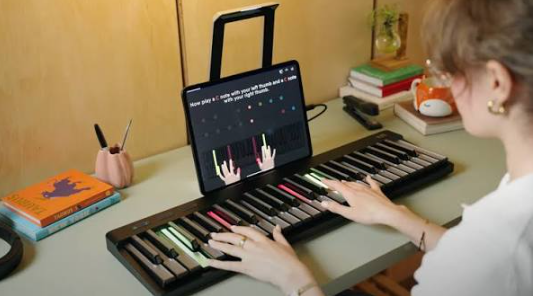
Interactive instruments like The ONE SING Smart Piano combine 61 touch-responsive keys with illuminated light guides and dedicated app integration. Rather than forcing you to memorize endless chord charts from static books, smart features guide your fingers dynamically:
- Visual Chord Guidance: Built-in lighting modes show you the exact root notes, triads, and inversions associated with complex chord symbols directly on the keybed.
- Auto-Accompaniment Modes: Practice keeping time with dynamic backing tracks that respond to the chord inversions you play.
- Real-Time Feedback: Companion apps detect whether you are hitting the correct chord tones, helping you catch mistakes immediately before bad habits set in.
Step-by-Step: From Lead Sheet to Full Performance
Combining lead sheets with smart piano practice creates a fast-track workflow for learning any pop, jazz, or worship song.
[Step 1: Read Melody] ➔ [Step 2: Map Left-Hand Chords] ➔ [Step 3: Combine with Light Cues] ➔ [Step 4: Improvise Style]
1. Sing and Sight-Read the Melody Line
Start by focusing exclusively on the right hand. Read the single melody stave on your lead sheet. Use your smart piano’s metronome or slow playback feature to lock in the rhythm until you can play the tune smoothly without stopping.
2. Identify and Build Left-Hand Chords
Examine the chord symbols above the staff. Break them down into basic components:
- Triads: Major (C), Minor (Cm), Diminished (Cdim).
- Seventh Chords: Major 7th (Cmaj7), Dominant 7th (C7), Minor 7th (Cm7).
- Slash Chords: G/B means play a G major triad in the right/middle register with a B in the bass.
If you come across an unfamiliar chord, use your piano’s app dictionary or light-up guides to reveal the fingering instantly.
3. Apply a “Lead Sheet Accompaniment” Pattern
Instead of playing heavy, static block chords in the low register, apply a tailored lead sheet accompaniment pattern in your left hand.
| Accompaniment Style | Left-Hand Technique | Best Genre / Tempo |
| Bass Octaves + Shells | Root in lower octave; 3rd & 7th in middle register | Ballads, Jazz, Pop Standards |
| Broken Arpeggios | Root – 5th – 8ve – 3rd played in a rolling pattern | Acoustic Pop, Classical Crossover |
| Rhythmic Comping | Syncopated quarter-note or eighth-note chord strikes | Up-tempo Pop, Rock, Funk |
| Root-Fifth Strum | Alternating root note and higher fifth interval | Country, Folk, Sing-along tunes |
4. Integrate Ear Training and Vocal Accompaniment
Once your hands are comfortable with the melody and chord framework, turn off the visual light guides. Try playing the left-hand chord progression while singing the melody out loud. Because lead sheets leave room for vocal interpretation, this approach turns your keyboard into the ultimate self-accompaniment tool for live performance or songwriting.
3 Smart Practice Habits to Accelerate Your Progress
To get the most out of your lead sheets and smart instrument, incorporate these three focused drills into your routine:
- Practice “Voice Leading”: When moving from one chord symbol to the next (e.g., C to G), do not jump your entire left hand across the keyboard. Use chord inversions so that smooth, minimal finger movements connect neighboring notes.
- Simplify First, Elaborate Later: On your first pass through a new lead sheet, play only the root notes in your left hand alongside the melody. Once the timing is steady, upgrade those root notes to full triads, 7th chords, or rolling arpeggios.
- Use Backing Tracks for Timing: Connect your smart piano via Bluetooth to stream audio backing tracks. Playing along with real bass lines and drum beats forces you to read ahead on your lead sheet and stay strictly on tempo.
Unlocking Total Musical Freedom
Combining lead sheet reading with smart piano technology gives you the best of both worlds: the structural clarity of written music paired with the creative flexibility of playing by ear. Instead of spending months memorizing rigid, multi-page classical scores, you gain the skills to pick up virtually any songbook, decode chord symbols effortlessly, and craft personalized arrangements on the spot.