Decorative glass films are often associated with privacy. Frosted bathroom windows, conference room glass, and entrance doors are common examples, but privacy is only one reason to use them.
These films can change the appearance of plain glass without replacing the existing panel. Depending on the design, they can introduce patterns, create visual separation, support branding, or add detail to otherwise simple interiors.
They are particularly useful where glass needs a design element but a permanent alteration would be impractical.
What Are Decorative Glass Films?
Decorative glass films are adhesive films designed to change the appearance of glass surfaces. They are available in finishes such as frosted, etched, textured, patterned, translucent, and printed designs.
Unlike replacing a glass panel, applying film allows the existing glass to remain in place.
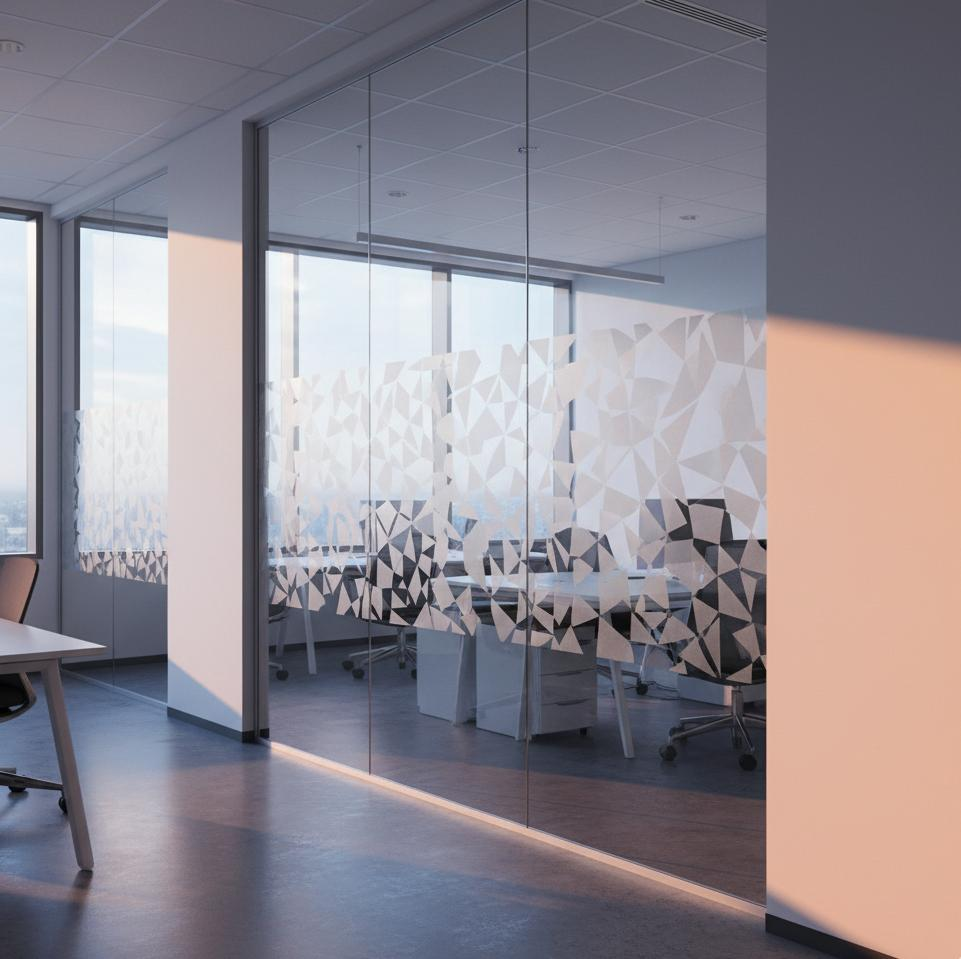
The film can cover an entire surface or be applied selectively. This makes it possible to create borders, stripes, geometric patterns, logos, or other visual details.
The design should match the purpose of the glass. A film used on an office partition, for example, may need a different treatment from one used on a residential entrance door.
Create Visual Interest on Plain Glass
Large areas of clear glass can sometimes look unfinished, particularly in offices, retail spaces, and modern interiors.
Decorative film provides a way to introduce detail without changing the structure of the space.
Some options include:
- Frosted geometric shapes
- Repeating lines
- Abstract patterns
- Textured effects
- Stripes and bands
- Custom printed graphics
- Partial frosting
- Decorative borders
A simple pattern can make a large glass panel more visually defined while allowing plenty of natural light to pass through.
Use Decorative Film as an Interior Design Feature
Glass does not have to remain a completely transparent surface.
Decorative glass films can be used as part of an interior design scheme. For example, a geometric film pattern can complement a contemporary office, while a softer frosted pattern may work better in a residential setting.
The advantage is flexibility. Designs can be applied to selected sections rather than covering the entire glass surface.
This is useful for:
- Glass doors
- Room dividers
- Internal partitions
- Staircase glass
- Reception areas
- Shower glass
- Cabinet glass
- Storefront windows
The film becomes part of the visual design rather than simply serving a functional purpose.
Add Branding to Office Glass
Glass partitions and doors offer unused space for company branding.
A business can use decorative film to display a logo, company name, pattern, or other brand element on internal glass.
For example, a logo can be positioned on a conference room partition while a frosted pattern covers part of the surrounding glass.
This can also help make transparent glass more noticeable. Clear glass doors and partitions can sometimes be difficult to see, particularly in busy environments. A visible design element can make the glass easier to identify.
Custom graphics should still be designed with the surrounding interior in mind. Oversized or overly dense graphics may reduce the clean appearance of the space.
Define Different Areas Without Building Walls
Open-plan offices often need visual separation without completely closing off the workspace.
Decorative film can help define different areas while retaining the existing glass partition.
For example, a frosted band can distinguish a meeting room from an open workspace. A patterned section can visually mark a reception area without creating a solid barrier.
This approach keeps the physical layout unchanged while giving different areas a clearer visual identity.
Create Accent Sections on Large Windows
Decorative glass films do not need to cover an entire window.
Partial applications can create accent sections that add character while leaving most of the glass clear.
Possible designs include:
- Horizontal bands
- Vertical strips
- Corner patterns
- Repeated geometric shapes
- Frosted borders
- Decorative panels
Partial coverage is also useful when natural light and outside views need to remain largely unobstructed.
Make Glass Doors Easier to See
Clear glass doors can blend into their surroundings.
This can become an issue in offices, restaurants, retail environments, and other spaces where people move around frequently.
A decorative film pattern can make the door more visually apparent. Frosted stripes, logos, or graphics can provide a visible reference point without requiring an opaque covering.
The design should be positioned at a practical height and remain visible under the lighting conditions of the space.
Use Decorative Film on Retail Storefronts
Retail businesses can use decorative glass films for more than privacy.
Storefront glass can display:
- Business logos
- Brand graphics
- Decorative patterns
- Promotional artwork
- Opening hours
- Directional information
- Seasonal designs
Printed film can be particularly useful when the design needs to be changed periodically.
For permanent or semi-permanent branding, the design should be kept consistent with the business’s existing signage and visual identity.
Add Detail to Residential Glass
Decorative films can also work well in homes.
Clear internal glass, entrance doors, bathroom windows, shower panels, and room dividers can all be customized with suitable designs.
For example, a homeowner may use frosted film on a bathroom window while using a decorative pattern on a glass room divider.
In homes with large windows, partial decorative film can also create a visual feature without blocking the entire view.
Use Frosted Film Without Making Glass Completely Opaque
Frosted film is useful when the goal is to soften the appearance of glass rather than completely block it.
Depending on the film and design, the glass can remain translucent while reducing direct visibility.
This can be useful for:
- Bathroom windows
- Office partitions
- Meeting rooms
- Reception areas
- Bedroom doors
- Internal glass walls
Different levels of frosting can be used to create patterns or sections instead of applying a uniform finish.
Combine Decorative Film With Other Window Film Functions
Decorative film can sometimes be used alongside other glass treatments, but compatibility needs to be checked before installation.
For example, a project may require both decorative treatment and solar control. The appropriate combination depends on the glass, film construction, and installation method.
The objective should be clear before selecting the materials. Adding multiple films without checking compatibility can affect appearance, adhesion, or performance.
Custom Designs for Unique Spaces
Standard patterns are not the only option.
Custom decorative films can be produced for spaces that require specific designs, such as company logos, architectural patterns, illustrations, or branded graphics.
Custom work is particularly useful when glass forms a significant part of the interior design.
Before production, check:
- Final dimensions
- Design scale
- Viewing distance
- Film finish
- Transparency level
- Installation surface
- Whether the design needs to be removable later
A design that looks good on a computer screen may appear very different when applied to a large glass panel, so scale should be considered carefully.
What to Consider Before Installing Decorative Glass Films
The appearance of the finished installation depends on more than the film design.
Before choosing a product, consider:
Glass Type
Confirm that the film is suitable for the glass being treated. Certain glass constructions may require specific film products or installation methods.
Lighting
A frosted or patterned film can look different depending on the amount and direction of natural and artificial light.
Coverage
Decide whether the film should cover the entire glass surface or only selected sections.
Removal
If the design is intended for a rented property, temporary office, or changing retail display, consider how easily it can be removed later.
Maintenance
Glass film should be cleaned using methods appropriate for the product. Abrasive tools or unsuitable cleaning products can damage the surface.
Decorative Glass Films vs. Replacing the Glass
Replacing glass provides a permanent design change, but it can involve more disruption and expense than applying film.
Decorative film can be a practical alternative when the existing glass is structurally suitable and the main objective is to change its appearance.
It also allows designs to be updated later without replacing the entire glass panel.
The better option depends on the condition of the existing glass, the desired appearance, the expected lifespan of the design, and the project budget.
Frequently Asked Questions
Can decorative glass films be used without covering the whole window?
Yes. Decorative films can be installed on selected sections to create borders, patterns, bands, logos, or other design elements.
Are decorative glass films only used for privacy?
No. They can also be used for interior decoration, branding, visual separation, glass visibility, and creating custom design features.
Can decorative film be used on office partitions?
Yes. Office partitions are a common application. Frosted patterns, logos, and partial designs can provide visual definition while keeping the existing glass.
Can decorative glass film be removed?
Many decorative films can be removed, although the process and result depend on the specific film, adhesive, installation conditions, and length of time it has been installed.
Can decorative film be customized with a logo?
Yes. Custom films can incorporate logos, graphics, patterns, and other designs when the selected product and printing method support customization.