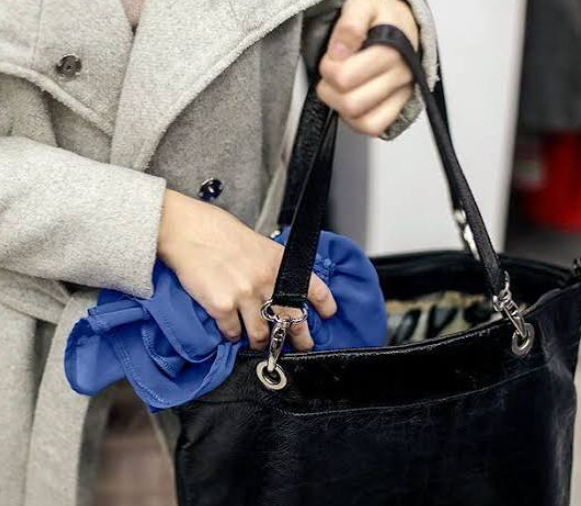
Most people assume that someone who repeatedly steals is simply dishonest or greedy. That assumption, while understandable, misses something significant. For a small but real portion of the population, stealing is not a choice driven by want or financial need. It is a compulsion they feel powerless to resist, often followed by intense guilt and shame. Understanding what drives that behavior requires looking past the act itself and into the psychology beneath it.
This article breaks down what kleptomania actually is, how it differs from ordinary theft, what researchers understand about its causes, and what treatment approaches show the most promise. Whether you are curious for personal reasons or trying to understand someone close to you, the picture here is more nuanced than most people expect.
What Makes Kleptomania Different From Ordinary Theft
Shoplifting and opportunistic theft are fairly common and usually motivated by something obvious: financial gain, peer pressure, thrill-seeking, or necessity. Kleptomania sits in a completely different category. The Diagnostic and Statistical Manual of Mental Disorders, fifth edition (DSM-5), classifies it as an impulse control disorder, grouped alongside conditions like intermittent explosive disorder and pyromania.
Several features separate it from routine stealing. First, the objects taken are typically of little value to the person and are often discarded, given away, or left unused. Second, the act is rarely planned. It tends to happen spontaneously in response to a mounting internal tension. Third, the person usually has the financial means to purchase what they take. The stealing is not about the object at all.
| Feature | Ordinary Theft | Kleptomania |
| Motivation | Financial gain or desire for item | Relief from internal tension |
| Planning | Often premeditated | Usually impulsive and unplanned |
| Value of items taken | Typically valuable to the person | Often low value or unwanted |
| Emotional aftermath | Satisfaction or indifference | Guilt, shame, and distress |
| Financial need | May be present | Rarely present |
| Classification | Criminal behavior | Mental health disorder |
The Cycle of Tension, Action, and Relief
One of the defining characteristics of kleptomania is a recognizable emotional cycle. It typically begins with a growing sense of tension or anxiety, sometimes described as an almost unbearable urge. When the person steals, that tension breaks and is replaced briefly by a sense of relief or even pleasure. Almost immediately after, however, feelings of guilt, remorse, and fear of consequences tend to flood in.
This cycle repeats. The brief relief reinforces the behavior at a neurological level, making it harder to resist over time. It is similar in structure to other compulsive behaviors, and that parallel is not coincidental. Researchers believe the same reward and inhibition systems in the brain play a central role.
It is worth noting that kleptomaniacs often go to considerable lengths to hide what they are doing, not because they are calculating criminals, but because they are deeply ashamed of behavior they feel they cannot control. That shame frequently prevents them from seeking help, sometimes for years or even decades.
What Research Tells Us About the Causes
No single cause explains kleptomania, and the research picture is still developing. Several contributing factors have been identified across biological, psychological, and environmental lines.
Neurological and Biological Factors
Studies point to disruptions in the brain’s serotonin and dopamine systems as possible contributors. Low serotonin activity is associated with impaired impulse control across a range of conditions. Dopamine, the chemical most associated with reward and motivation, may drive the sense of relief that follows the act of stealing. Some researchers have also looked at the opioid system, noting that medications that block opioid receptors have shown effectiveness in reducing urges, which suggests that endorphin release may be part of the mechanism.
Psychological and Environmental Factors
Kleptomania frequently co-occurs with other mental health conditions. According to research published in the Journal of Clinical Psychiatry, a significant proportion of people with kleptomania also meet diagnostic criteria for mood disorders, anxiety disorders, substance use disorders, or other impulse control disorders. Trauma history also appears with some regularity in this population, though the precise relationship between trauma and kleptomania is not fully established.
Family history may also play a role. Some data suggests that obsessive-compulsive spectrum disorders run in families of individuals with kleptomania, pointing to a possible genetic vulnerability, though this area needs more investigation before firm conclusions can be drawn.
How Common Is It and Who Is Affected
Kleptomania is considered relatively rare. Estimates suggest it affects somewhere between 0.3 and 0.6 percent of the general population, according to figures cited in psychiatric literature including work by Dr. Jon Grant, one of the leading researchers in impulse control disorders. Among those arrested for shoplifting, the prevalence is estimated to be higher, somewhere around 4 to 8 percent, though that figure is difficult to verify precisely because many people with the condition never come to clinical attention.
Women are diagnosed with kleptomania at higher rates than men, with some estimates suggesting a ratio of roughly two to one. Whether this reflects a true difference in prevalence or a difference in help-seeking behavior, detection rates, or diagnostic bias is not entirely clear. The condition can begin at almost any age, but onset most commonly appears in adolescence or early adulthood.
Diagnosing Kleptomania: What the Criteria Actually Require
Getting an accurate diagnosis is not straightforward, partly because people are reluctant to disclose the behavior and partly because clinicians need to rule out other explanations. The DSM-5 sets out specific criteria that must all be present for a kleptomania diagnosis.
- Recurrent failure to resist impulses to steal objects that are not needed for personal use or monetary value
- A rising sense of tension immediately before committing the theft
- Pleasure, gratification, or relief at the time of committing the theft
- The stealing is not committed to express anger or vengeance, and is not in response to a delusion or hallucination
- The stealing is not better explained by conduct disorder, a manic episode, or antisocial personality disorder
That last criterion is important. Clinicians have to consider a range of alternative explanations before landing on kleptomania. Bipolar disorder in a manic phase, for instance, can produce impulsive stealing. Antisocial personality disorder involves a pattern of disregard for rules and others that may include theft. Psychosis can also produce behaviors that look superficially similar. A thorough psychiatric evaluation is the only reliable way to distinguish between them.
Treatment Options That Show Real Promise
The good news is that kleptomania responds to treatment, particularly when the person is willing to engage consistently. Several approaches have evidence behind them.
Medication
Naltrexone, an opioid antagonist typically used for alcohol and opioid use disorders, has shown meaningful results in reducing the urge to steal in several studies. The hypothesis is that it blunts the reward signal associated with the act, making the compulsion weaker over time. Selective serotonin reuptake inhibitors (SSRIs) are sometimes used, particularly when kleptomania co-occurs with depression or anxiety, though the evidence specifically for kleptomania is less consistent than for naltrexone.
Cognitive Behavioral Therapy
Cognitive behavioral therapy (CBT) is frequently used alongside or instead of medication. Specific techniques that have shown usefulness include covert sensitization, where the person learns to pair the urge with an imagined aversive consequence, and exposure and response prevention, a method borrowed from OCD treatment. The goal in both cases is to break the automatic link between tension and the stealing behavior, giving the person a different way to manage the underlying emotional state.
Addressing Co-occurring Conditions
Because kleptomania so often appears alongside other conditions, treatment that addresses only the stealing behavior tends to be less effective in the long run. A comprehensive approach that also looks at depression, anxiety, trauma, or substance use tends to produce better outcomes. Integrated treatment plans, where a psychiatrist and therapist collaborate, are generally considered best practice in complex cases.
See also: Mental Health Resources: What Actually Helps
Why So Few People Get Help and What Changes That
Shame is the single biggest barrier to treatment. Many people with kleptomania carry the secret for years before disclosing it to anyone, including a doctor. Some never do. The fear of legal consequences adds another layer of reluctance. And the persistent cultural assumption that stealing is always a moral failing, rather than potentially a symptom of a treatable condition, makes it harder for people to see themselves as deserving of help.
Public education matters here. When people understand that compulsive behaviors can have neurological roots and that effective treatment exists, the threshold for seeking help tends to lower. Mental health professionals who create non-judgmental spaces for disclosure also play a real role in changing outcomes.
Kleptomania is a genuine psychiatric condition with real consequences for the people living with it, from legal jeopardy to fractured relationships to years of private suffering. It is not a character flaw dressed up in clinical language. With accurate diagnosis and appropriate treatment, most people can reduce or eliminate the behavior significantly. The path there starts with understanding what the condition actually is, which is precisely what the research, and frank conversations like this one, are meant to support.